Waterproof Snake Camera Explained: A UK Buyer's Guide
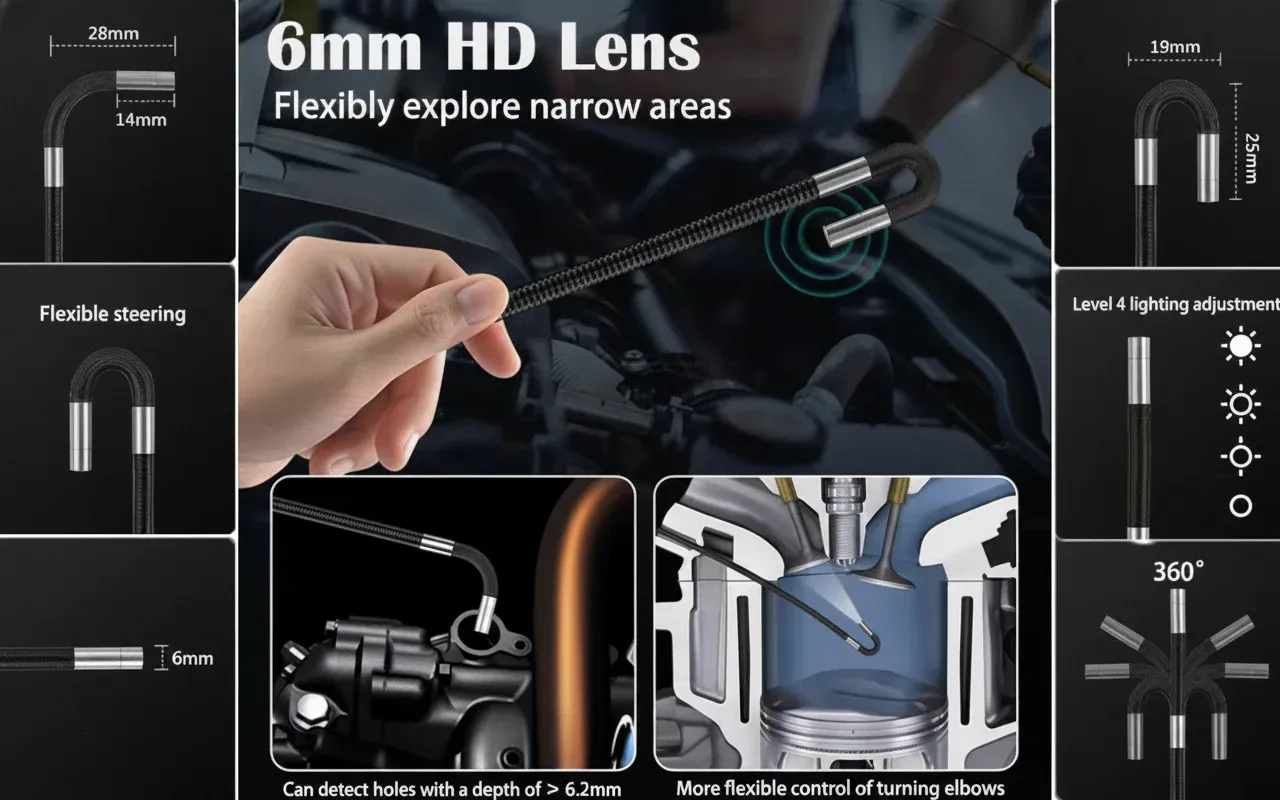
TL;DR: A waterproof snake camera is a sealed inspection camera on a flexible cable that works inside wet waste pipes, traps and gullies — the places a plumber actually needs to look before quoting. IP67 covers temporary immersion (1 metre for 30 minutes), which handles most domestic waste-pipe work; IP68 adds continuous-immersion tolerance you rarely need above ground. The feature that changes outcomes on the job is a steerable tip: it is what gets the lens around a trap and pointed at the blockage, so the customer is agreeing to a fix you have both just seen.
What is a waterproof snake camera used for?
A waterproof snake camera feeds a slim, sealed lens into wet, awkward spaces. The “snake” part is the flexible cable that follows bends the way a rod cannot; the “waterproof” part is what lets it do so in standing water, recently flushed lines and greasy kitchen runs without the electronics giving up.
For a working plumber, the routine version of the job looks like this: a customer reports a slow or blocked sink, you clear the trap, and the question becomes what is actually sitting further down the branch line. Feeding a sealed camera through the waste pipe answers it in minutes — grease plug, scale ridge, a child's toy at the swan-neck — and answers it on camera, which matters when you are about to tell someone the job is bigger than a plunge.
In practical terms, a waterproof snake camera lets you:
- confirm what and where a blockage is before quoting the work
- inspect traps, waste runs and external gullies without dismantling boxing
- check for corrosion, cracked joints and failed seals in wet pipework
- show the customer the problem on your phone screen — and save the clip with the job record
- prove a line is clear after the work, before you leave
Do I need a waterproof snake camera for UK plumbing work?
If you work on domestic waste systems, yes — a non-sealed camera in this trade is a tool with a countdown timer. Sink wastes, shower traps, external drains, downpipes and condensate lines are wet even when the fault is not, and the UK's older housing stock adds hidden runs and improvised pipework that only a camera will explain. In 2023, 15% of homes in England — around 3.8 million dwellings — failed the Decent Homes Standard according to the English Housing Survey (GOV.UK), and ageing, part-repaired plumbing is exactly the environment where guess-first repairs waste labour.
A sealed inspection camera earns its place in the bag the first time it turns “could be the trap, could be the stack” into a specific, quotable fault — located, photographed, agreed.
Common UK inspection scenarios
- Domestic plumbing: traps, waste pipes and concealed leaks beneath baths and sinks
- Drainage: slow flow, partial blockages and debris in external pipework and gullies
- Wet voids: tracking a leak across a ceiling void or behind boxing before opening it
- Appliance runs: washing-machine and dishwasher waste hoses and standpipes
- Condensate lines: checking boiler condensate runs for sludge and freeze damage points
Homeowner-side guidance for the same territory — what a customer can reasonably check themselves before calling you — is covered in our drain inspection camera guide.
How does a waterproof snake camera work?
The camera head carries a small HD sensor ringed by LEDs, sealed against water and dust. You guide the cable into the pipe and the live image streams to your phone — the C30 6 mm articulating endoscope does this over a wired USB-C connection on the phone, so there is no separate monitor to charge and no Wi-Fi to drop out mid-inspection.
Are articulating snake cameras better than fixed ones?
For pipe work, decisively. A fixed lens points wherever the cable curls, which inside a waste run usually means the pipe wall a few millimetres away. An articulating tip steers from a slider on the handle — the C30 bends both ways, a wide view with a roll of the probe — so you can follow the bore around a trap, look along the branch after a bend, and centre the lens on the actual obstruction.
- Fixed lens: fine for straight, open runs; blind at traps and tees
- Articulating tip: steers through swan-necks and past rest bends — the difference between “I think it's clear” and footage of the fault
What should you look for in a waterproof snake camera?
1. The right IP rating — and what it actually covers
IP67 means dust-tight and protected against temporary immersion — typically 1 metre of water for 30 minutes. That covers trap-and-branch work, flooded gully checks and wet wall voids. IP68 means continuous immersion under manufacturer-specified conditions; it matters for prolonged submerged surveys, which in domestic plumbing are rare.
Two habits keep a sealed camera sealed. First, read what the rating covers: on the C30, IP67 applies to the probe and lens — the handle, connector and phone stay dry. Second, rinse and wipe the probe after greasy or dirty lines so the seals and lens stay serviceable.
2. Camera diameter
A 6mm head passes 32mm and 40mm domestic waste pipes, trap openings and tight gully gaps with room to steer. Larger heads carry bigger sensors but start binding exactly where blockages live. The sizing trade-offs are covered in our 6mm endoscope camera guide.
3. Lighting on the handle
Wet uPVC and standing water throw glare. LEDs sit around the lens on the C30. Use the light button on the handle.
4. Cable behaviour
The cable on the C30 is 1 m. It suits sinks, baths, short branch runs and accessible gullies. Main runs need a push rod. main runs and long soil stacks need dedicated push-rod kit, and pretending otherwise is how probes get lost.
5. Recording on the phone you already carry
Stills and clips save straight to your handset at 1920 × 1440. That is your before/after evidence, your “this is what the wipes did” conversation with the customer, and your record if a landlord or insurer asks later.
FAQ
Can a waterproof snake camera be used in a flooded pipe?
Yes, within its rating — IP67 covers temporary immersion to 1 metre for 30 minutes. Murky standing water scatters light though, so partially clearing the line first usually gives a far more useful image.
Is IP67 or IP68 better for plumbing work?
IP67 handles typical domestic waste-pipe and gully inspections. IP68 adds continuous-immersion tolerance that mostly matters for prolonged submerged surveys — worth having, rarely worth paying extra for above ground.
Will a snake camera fit a 32mm sink waste?
A 6mm camera head passes 32mm waste pipe with clearance to steer, including past most trap geometry. Check your access point first: some bottle traps are easier to remove than to navigate.
Do I need Wi-Fi on an inspection camera?
No — for wet, time-pressured work a wired camera is the simpler tool: powered by the phone, zero lag, nothing to pair. The C30 is wired by USB-C by design.