6mm Endoscope Camera Explained: A UK Buyer's Guide
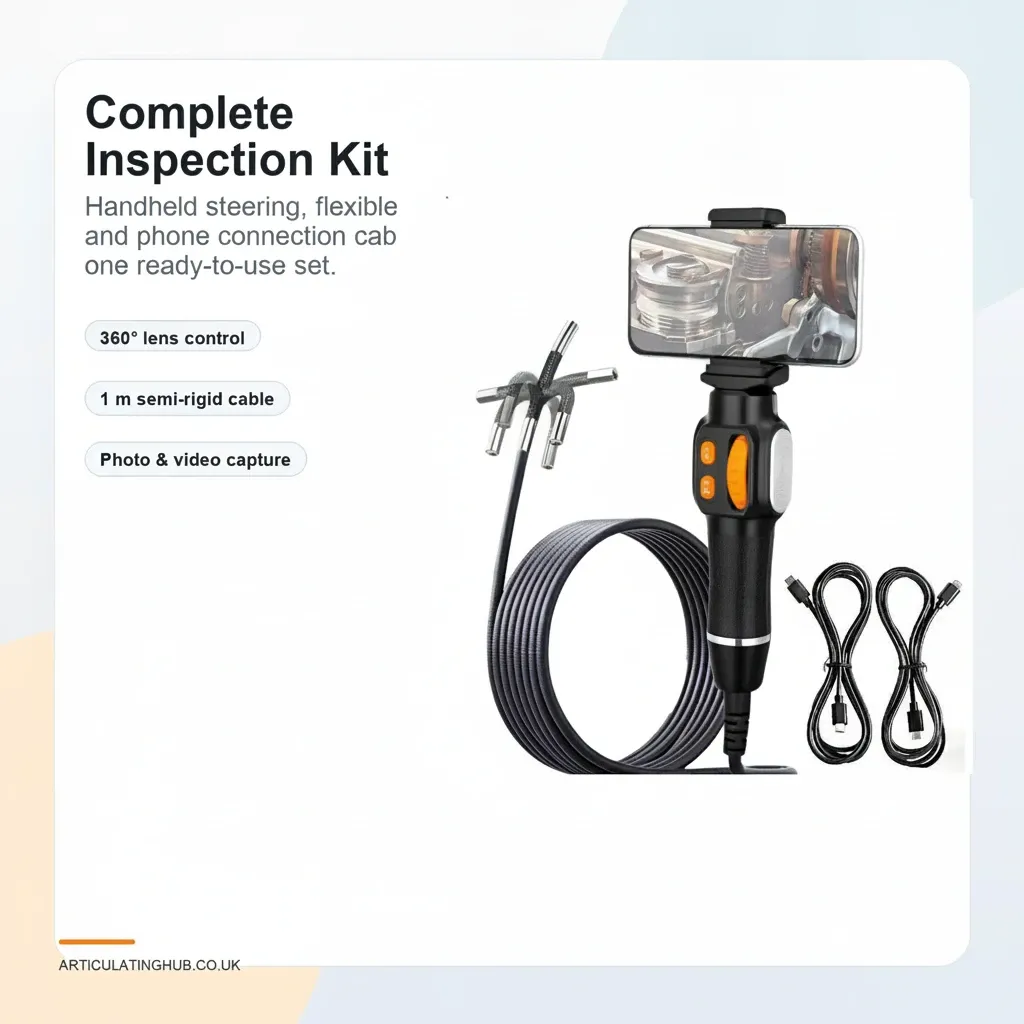
TL;DR: A 6mm endoscope camera is a slim inspection camera on a flexible cable, and the probe on this camera is 6 mm. That is why weekend mechanics use one to check cylinder walls, valve faces and piston crowns before committing to a strip-down. If you already own a cheap fixed-lens probe, the upgrade that actually changes results is two-way steering, not more megapixels.
What is a 6mm endoscope camera?
A 6mm endoscope camera is an inspection device with a 6-millimetre camera head on the end of a slim cable, viewed live on your phone. The measurement refers to the outer diameter of the camera head itself, and it is the figure that decides where the probe can physically go: through a tight gap, into a narrow seat, past a boxed-in pipe joint.
For anyone who services a petrol car, motorbike or project car on weekends, that diameter is the difference between a tool you use and a gadget that stays in the drawer. Larger 8–10mm heads can carry bigger sensors, but they bind in a narrow opening and cannot be angled once inside. Slimmer 3.9–5.5mm probes exist for specialist work, yet they give up LED output and feel fragile on repeat jobs.
The C30 6 mm articulating endoscope is built around exactly this trade-off: a 6mm probe with two-way steering, an IP67-rated probe and lens, and 1920 × 1440 imaging on the phone you already own, at £62.71.
Key Takeaways
- A 6mm endoscope camera is 6 mm, so it reaches a tight gap, and a slider bends the tip both ways.
- Two-way articulation matters more than resolution in a cylinder: a fixed lens mostly shows you the opposite bore wall.
- Look for an IP67-rated probe so oil, coolant and washer fluid contact does not end the tool's life.
- The cable on this camera is 1 m. A slider on the handle bends the tip both ways.
- A visual check tells you whether a strip-down is justified — it complements a compression or leak-down test, it does not replace one.
Where does a 6 mm endoscope camera fit?
The probe on this camera is 6 mm, on a 1 m cable. A slider on the handle bends the tip both ways. Use it to look into a tight gap, a little at a time.
Checking cylinder walls before you decide on a strip-down
The classic weekend-mechanic question is whether a rough-running engine needs opening up. Through the plug hole, a steerable 6mm endoscope camera lets you sweep across the cylinder wall and look for vertical scoring, glazed bores, remaining cross-hatch and heavy carbon on the piston crown. With the plugs out and the ignition disabled, turning the engine over by hand also brings the valve faces into view, so you can spot a bent or badly coked valve without lifting the head.
What a visual check can and cannot tell you
Be honest about the limits. A camera shows you surface condition — scoring, deposits, witness marks from a dropped washer — but it does not measure compression, ring seal or valve clearance. Treat the image as the evidence that decides whether a leak-down test or a strip-down is worth your Saturday. If the bore looks clean and cross-hatched, you have saved yourself a teardown; if you can see scoring catch the light, you know the job is real before you order parts.
Why steering beats resolution inside an engine
A fixed-lens probe dropped into a cylinder points wherever the cable happens to curl — usually straight at the far bore wall. To inspect the full circumference you end up withdrawing and re-feeding it over and over, and you still miss the area under the plug hole entirely. This is the frustration that pushes people who bought a £20 fixed probe to upgrade within a year.
Two-way articulation fixes it mechanically: a slider on the handle bends the tip both ways, and rotating the probe between your fingers turns that arc into a wide view of the bore, the piston crown and the valve area. The C30's 1920 × 1440 sensor is sharp enough to show cross-hatch honing marks; what makes the image useful is being able to point it at the surface you actually need to judge.
LEDs around the lens matter here too. Fresh oil film on a cylinder wall throws glare at full brightness, so being able to dim the ring light close-up is the difference between seeing scoring and seeing reflections.
What features should you look for in a 6mm endoscope camera?
Two-way articulation with a slider
If the tip cannot steer, you are back to guessing. Look for genuine mechanical articulation controlled from the handle — left and right both ways — rather than a pre-bent tip you rotate from outside. It is the single feature that separates diagnostic tools from novelty gadgets.
Image quality in a dark, oily bore
Inside an engine there is no ambient light and every surface reflects. Judge a camera by its close-focus behaviour a few centimetres from the subject and its LED control, not the headline resolution. 1920 × 1440 with adjustable lighting reads cylinder-wall detail; a nominally sharper sensor behind a fixed LED mostly reads glare.
An IP67-rated probe
Engine work is wet work: oil mist, coolant drips, brake cleaner overspray. The C30's IP67 rating covers the probe and lens, so wiping it down after contact with fluids is routine — just keep the phone end and connector dry. The same sealing is what lets the tool double up on wet household jobs; if that is your main use case, our waterproof snake camera guide covers IP ratings in depth.
A 1 m cable
For engine bays, cable discipline beats cable length. The cable on the C30 is 1 m. A slider on the handle bends the tip both ways. Longer, softer cables are drain-run equipment, not engine equipment.
A wired phone connection
The C30 plugs into a USB-C phone with the USB-C lead in the box. The picture shows on the phone. Read the android endoscope camera guide for Android, and the endoscope camera for iPhone guide for a USB-C iPhone.
Beyond the engine bay
The same 6mm probe earns its keep around the house — behind bath panels, under floorboards, down a slow-draining sink. Those jobs have their own buying criteria, so if drains are your priority start with our drain inspection camera guide for UK homeowners rather than buying on engine-bay logic.
FAQ
Will a 6 mm endoscope camera reach a tight gap?
The probe on this camera is 6 mm. A slider on the handle bends the tip both ways. In a very tight gap you may only get a straighter view.
Can I see piston rings with a 6mm endoscope camera?
Not directly — the rings sit in their grooves on the side of the piston, out of sight from above. What you can see is the evidence they leave: bore scoring, glaze, oil wetting above the ring travel and carbon patterns on the crown. Those signs, plus a compression test, tell the ring story.
Is a 6mm endoscope camera worth it over a £20 fixed probe?
If you inspect engines more than once or twice a year, yes. The fixed probe shows you a wall; a steerable 6mm probe shows you the wall you chose. That is usually the difference between a confident decision and a second-guess strip-down. And if diagnosis is how you earn rather than how you spend Saturdays, our borescope camera guide covers the working-mechanic angle.