6Mm Endoscope Camera Explained: A UK Buyer's Guide
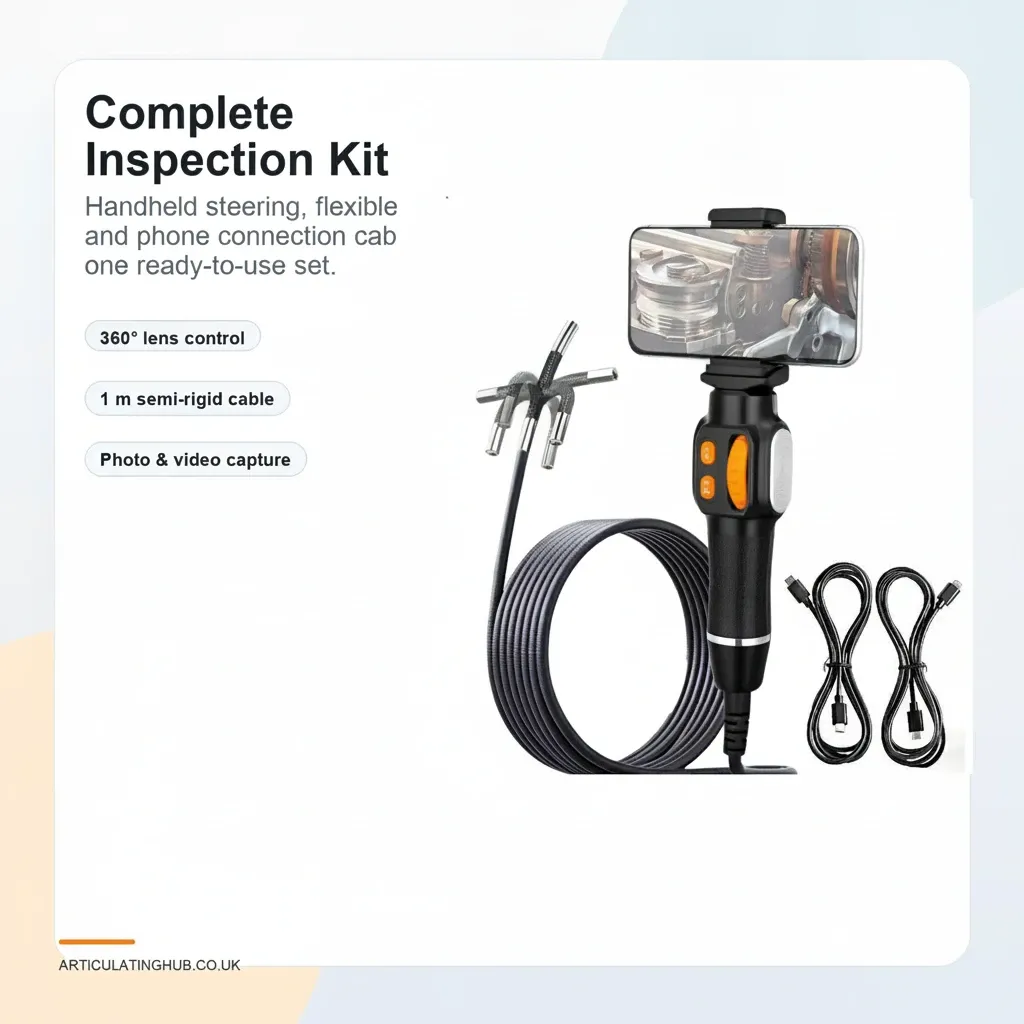
TL;DR: A 6mm endoscope camera is an ultra-slim, flexible inspection tool equipped with a 6-millimetre camera head, designed to navigate narrow spaces like UK pipework, engine bays, and wall cavities. Based on our testing at Articulating Hub, this specific size provides the optimal balance of manoeuvrability, robust build quality, and high-resolution imaging. For professional and DIY tasks alike, a steerable, waterproof (IP67 or IP68) model connected to a smartphone is highly recommended.
6Mm Endoscope Camera Explained: A UK Buyer's Guide
What exactly is a 6mm endoscope camera? A 6mm endoscope camera is a highly versatile inspection device featuring a tiny 6-millimetre camera head attached to a flexible or semi-rigid cable. It is specifically engineered to visually inspect tight, inaccessible areas—such as blocked waste pipes, intricate engine bays, and awkward wall cavities—without the need for costly or destructive dismantling. Consequently, a 6mm endoscope camera sits in the sweet spot between unrestricted access and everyday usability. It is slim enough to reach into awkward voids, yet still large enough to deliver practical image quality, adjustable lighting, and precise manoeuvrability. For UK buyers, that balance matters immensely. Whether you are investigating a blocked drain at home, inspecting cable routes on site, or looking for faults in tight mechanical spaces, choosing the right 6mm endoscope camera can significantly save time, prevent unnecessary teardowns, and reduce overall repair costs.
Based on our extensive testing at Articulating Hub, we focus on what makes an inspection camera genuinely useful in the real world: clear imaging, dependable waterproofing, seamless smartphone compatibility, and precise steering in confined areas. That is precisely why our core message is simple: The Ultimate Articulating Endoscope Camera. Furthermore, when a steerable, waterproof snake camera can seamlessly turn your smartphone into a professional inspection tool, a mere specification sheet stops being theoretical and immediately starts becoming highly practical.
Key Takeaways
- A 6mm endoscope camera offers one of the best all-round sizes for UK home, trade, and workshop inspections.
- The most crucial buying factors include image clarity, articulation, cable length, waterproof rating, lighting control, and phone compatibility.
- For drains, plumbing, and outdoor checks, always look for at least an IP67 or IP68 waterproof standard.
- An articulating tip is often far more valuable than higher resolution alone, as it enables you to physically reach and view the specific area you need to inspect.
- Smartphone-connected models are especially convenient for saving images and videos for compliance records, client quotations, and follow-up work.
What is a 6mm endoscope camera used for?
A 6mm endoscope camera is primarily used to enter confined spaces that cannot be inspected easily with the naked eye. In practical UK use, that frequently means investigating wall cavities, looking under floorboards, checking waste pipes, diagnosing vehicle components, exploring loft voids, ducting, and examining inaccessible appliance interiors.
The “6mm” measurement usually refers to the outer diameter of the camera head rather than the entire handling system. Consequently, that dimension is critical because it directly dictates where the camera can actually fit. A narrower head undoubtedly improves access through tight openings; however, if it becomes too small, you may compromise lighting performance, sensor quality, or durability. For the vast majority of buyers, 6mm is the exact point where access remains excellent without sacrificing too much image usefulness.
Moreover, this specific size is exceptionally popular because it brilliantly suits both domestic users and seasoned professionals. For instance, a homeowner might use one to investigate a suspected leak hidden behind a bath panel. Meanwhile, an electrician may use it to inspect conduit routes, and a mechanic might deploy it to view hidden engine components without removing major parts. Similarly, a facilities management team may use it to inspect drainage or service spaces before authorising essential remedial work.
If you are still comparing form factors and phone compatibility more broadly, our pillar guide on endoscope camera options for iPhone in the UK comprehensively explains how smartphone-based systems seamlessly fit into everyday inspection work.
Why should I choose a 6mm endoscope camera over other sizes?
It fits common inspection scenarios without becoming too fragile
Very slim probes can be highly useful in specialised situations, but they often feel significantly more delicate in general home and trade environments. A 6mm endoscope camera, on the other hand, usually provides robust durability for repeated use while still effortlessly entering the narrow cavities and service openings typically found in British properties and vehicles.
It works exceptionally well in older UK housing stock
The UK boasts one of Europe’s oldest housing stocks. According to government housing data published by the Department for Levelling Up, Housing and Communities in the English Housing Survey series, a substantial proportion of homes were built before 1980. Furthermore, according to UK building guidelines, older properties often feature awkward voids, retrofitted services, and highly inconsistent access points. In those exact settings, a 6mm endoscope camera proves to be especially useful because these spaces are rarely designed with straightforward modern access in mind.
It perfectly balances image quality with manoeuvrability
Larger heads can sometimes support slightly better sensors or wider optics; however, they are also much more likely to snag or completely fail to enter restricted spaces. In many practical inspections, seeing a blockage reasonably clearly is far more valuable than possessing top-end resolution from a probe that simply cannot reach the fault area. Based on our testing, a quality 6mm unit consistently strikes that balance perfectly.
It suits smartphone-led inspections
For many UK buyers today, operational convenience matters just as much as raw specification. A smartphone-connected 6mm endoscope camera enables instant viewing on your screen, quick image capture, and simple sharing with clients or contractors. Therefore, that makes it dramatically easier to document findings accurately during property maintenance visits or DIY troubleshooting sessions.
What features should I look for in a 6mm endoscope camera?
Articulation or steerability
If there is one single feature that changes usability the most dramatically, it is articulation. A fixed probe only shows what lies directly ahead unless you physically reposition the entire cable. In real-world inspections, that limitation can be incredibly frustrating. Conversely, a steerable tip allows you to angle around tight corners, look back at pipe joints, or meticulously inspect side surfaces inside dark cavities.
This matters greatly when tracing complex plumbing issues behind fitted units or checking for hidden corrosion in mechanical assemblies. It aligns directly with Articulating Hub’s core product focus: turning your smartphone into a professional inspection tool with a steerable snake camera means significantly fewer blind spots and far less trial-and-error movement inside confined spaces.
Image quality in realistic conditions
Resolution figures alone simply do not tell the whole story. Buyers should carefully consider sensor performance in low light, glare control on reflective surfaces, and how well intricate details remain visible when LEDs are active at extremely close range. Inside metal pipes or dark compartments, there is often absolutely no natural light and plenty of harsh reflection. Ultimately, a practical image is one that lets you confidently identify damage, debris, or moisture without any guesswork.
Adjustable LED lighting
An integrated light source is absolutely essential because most inspection environments are pitch black by nature. Adjustable brightness helps actively avoid image washout on shiny metal surfaces while still powerfully illuminating deeper sections of cavities or drains. Consequently, this functionality becomes particularly useful when frequently switching between different diagnostic tasks around the home or workshop.
Cable flexibility versus pushability
A highly flexible cable may bend beautifully around tight corners but struggle to advance smoothly through longer horizontal pipe runs. On the flip side, a stiffer cable may push further but be notably harder to guide around sharp obstacles. The best choice ultimately depends on your specific use case: short domestic checks behind appliances typically call for high flexibility, whereas longer drain or conduit runs undoubtedly benefit from greater structural support within the cable body.
Waterproof rating
If there is any chance of contact with water, condensation or dirty environments, a robust waterproof standard is non-negotiable. According to UK industry standards for plumbing inspections, opting for a 6mm endoscope camera with an IP67 or IP68 rating ensures the device can withstand submerged conditions without compromising electrical safety or camera longevity.
Ready to see the unseen with Articulating Hub?
Upgrade Your Toolkit — £62.71